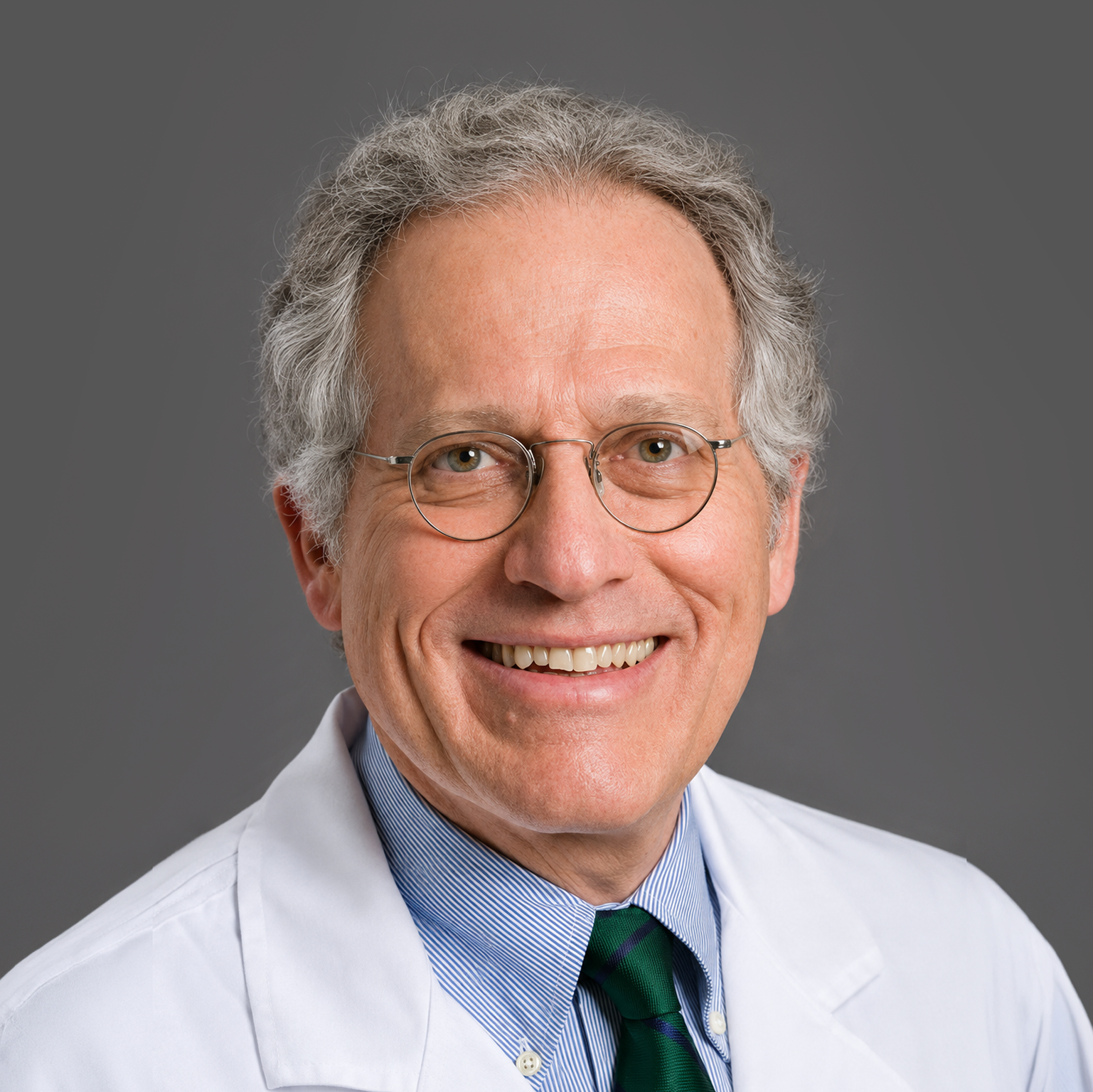
In October 2026, Dr. Sheldon Lidofsky, a gastroenterologist and principal investigator in Rhode Island, was interviewed by Renee Ambrose, Site Network Director at Alimentiv, in celebration of his retirement and prolific career. This interview has been edited for clarity.
Dr. Sheldon Lidofsky is a gastroenterologist and local expert in inflammatory bowel disease (IBD) in Rhode Island. He first joined forces with Renee and Alimentiv on the OSCAR study with Dr. Bruce Sands, who is also well known in IBD and an Alimentiv scientific advisor. Dr. Lidofsky went on to serve as a PI on many clinical trials run by Alimentiv, resulting in numerous opportunities to collaborate on IBD research.
Dr. Lidofsky brings extensive clinical experience in the diagnosis and management of IBD and is highly regarded in his commitment to providing thoughtful, patient-centered care.
What drew you to gastroenterology?
GI generally, and IBD specifically, is an intellectually challenging problem for a clinician. Many of the diseases are long-term, chronic illnesses and so it really allows you to establish longstanding relationships with patients, which I find extraordinarily rewarding. In fact, I’ve been practicing so long that now I’ve been seeing second-generation family members with the same diseases, because of the genetic predisposition. It’s a very humbling experience to take care of these patients and their families.
There’s also the component of endoscopic evaluation of patients, which offers more immediate return. Overall, it’s an extraordinary specialty for me, so I’ve been blessed with my choice.
Describe your collaboration with Alimentiv
Alimentiv has provided all of the components to make our studies together very collaborative. I emphasize the word ‘collaborative’—it really feels like a team effort.
Alimentiv was always available and responsive to our needs. You treated our research team with a great level of respect. I’ve been extraordinarily happy with our collaboration and all that Alimentiv has offered to myself, to [my partner] Dr. Mueller, and to our fellow researchers. It’s been successful in that the research has produced results that can be applied to patients who are in need.
Why is IBD specialization important for both CROs and investigators conducting clinical research?
For CROs, it’s a particularly important component for a successful study because you have a particular understanding of what it takes for inflammatory bowel disease research trials to succeed. You have that scientific knowledge that you bring to the research study.
For investigators, it’s important because IBD has become such a complicated disease to treat. There are so many factors that you need to enter into your treatment equation: age, the patient’s desire for how they would like to be treated. Do they have any concomitant diseases you can treat simultaneously with the same medication? There are issues of pregnancy and fertility.
We now have the benefit of many treatment options and are trying to understand the best way of positioning therapy. What do we treat that individual patient with first? What works best for that patient’s clinical situation? It makes it much more complicated, but much more interesting and much more effective because we’re not just randomly treating; we’re basing our treatment on the science that we know now. And we have multiple options and multiple different mechanisms that we can therapeutically attack.
How has our understanding and treatment of IBD evolved during your career?
It’s evolved in an exponential way. When we first started my fellowship at Mount Sinai Hospital, we unfortunately had very little to offer patients: we had salicylates, steroids, antibiotics for occasional situations, and surgery. Then came the immunomodulators, and that was an extraordinary advance for us. But when we first started out, we treated patients to get them symptom-free; that was our goal, and we felt ecstatic when we could make the patient feel whole.
What was very interesting for me, especially as someone newer to the field, was to have an endoscopic examination of the patient before they were treated, and their colon may have looked horrendous. We treated the patient with the treatments we had available at that time, and they would say, “I feel great.” But then you’d perform the endoscopy and it would look the same—just as angry as it was pre-treatment. And that was where we left it.
Now, we have so many different forms of therapy. We have a better understanding of the pathophysiology of IBD: we understand many of the mechanisms, and are trying to address them. We’re seeing dramatic improvement, and to me that’s extraordinary.
How has the way you monitor your patients’ disease evolved? Where do you see that going?
This is where the STRIDE (Selecting Therapeutic Targets in Inflammatory Bowel Disease) information and strategy come into play, because they allow us to monitor patients’ symptoms. We have biomarkers to follow patients with: calprotectin, CRPs, sed rates; we have endoscopic evaluations that we perform on a regular basis, and this allows us to determine how well our patient is responding to our therapy. If the therapy is not working, then we need to rethink why.
What do you foresee for the future of IBD care?
We know that once the illness has been established, it becomes difficult to reverse. If we can identify high-risk patients before they manifest their disease, then maybe we can actually modify the natural history of that disease. That, to me, would be extraordinary. And we know high-risk patients: We know first-degree relatives, monozygotic twins, patients who have other immune-mediated inflammatory diseases all have higher risks for developing inflammatory bowel disease. We now are developing biomarkers and microbial markers and molecular findings that can identify patients years before they have disease. And then, is there something we can do to modify that disease before it becomes manifest?
We might be able to improve the epithelial barrier, alter the microbiome, or alter the immune cells that contribute these cytokines. To me, that’s really exciting and I hope that’s in the very near future.
You’ve worn two hats throughout your career: the physician on the bedside and the principal investigator helping to advance research. What did being a PI allow you to offer patients that being a clinician alone did not?
It allowed me to offer patients additional hope in treating their illness. The research allows us to offer additional potential options that may be successful when our standard options of therapy have not been.
What are you particularly proud of in your career?
The longstanding relationships I’ve had with patients.
What are your plans for your retirement?
Family is the top of the list, and taking better care of myself. I look forward to walks in the woods so I can contemplate. Books, travel, the standard fare.