This interview has been condensed and edited for clarity.
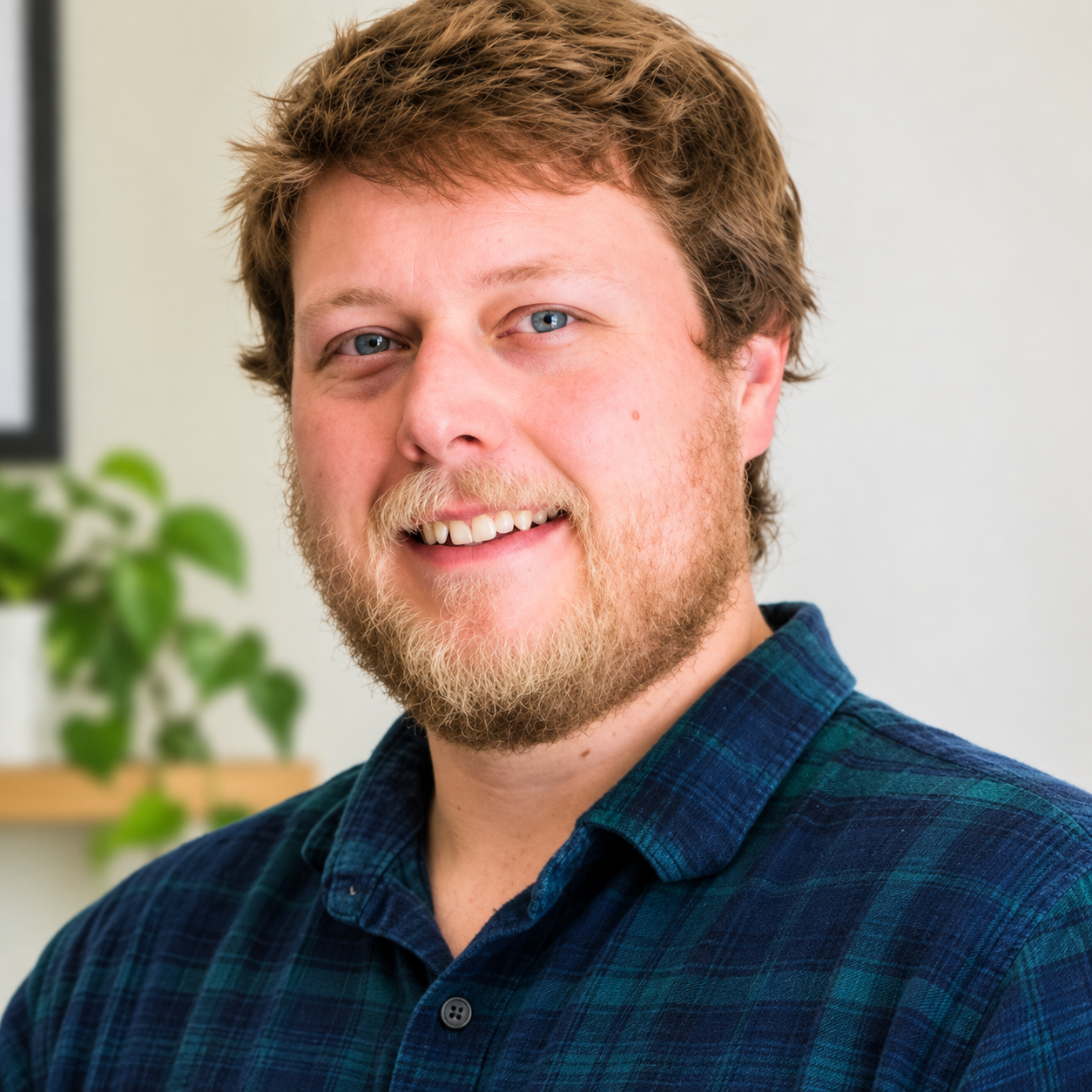
Jared Bozarth is an in-house CRA at Alimentiv.
What does your role entail as an in-house CRA?
An in-house CRA is exactly how it sounds. I do a lot of CRA work, but I don’t do the traveling piece.
Because of this, my day-to-day work looks similar to that of other CRAs. But instead of traveling, I’m doing things collectively for the team, like document collection and action items. I will take on any remote items that can help out the team to lighten their load, because often the traveling CRA load is very heavy. My role is to help with efficiency and make sure things get done in a timely manner.
At Alimentiv, the in-house and field CRAs work together as an integrated monitoring team. We provide continuity of oversight between visits. The ongoing in-house CRA review helps identify emerging risks and often guides where the CRA needs to focus when on-site. Then, the CRA observations further guide oversight between visits—creating a continuous feedback loop. Together, we provide sponsors with the right oversight at the right time.
What are the benefits of continuous monitoring and oversight provided by in-house CRAs?
In my role, quality oversight doesn’t begin and end with a monitoring visit. I provide ongoing review of critical data between visits, helping us to identify risks earlier and engage sites when it matters the most. I have greater visibility to catch trends or compliance issues as I review the data not just at critical time points, but along the whole journey, and have the availability to contact sites right away.
How do in-house CRAs operationalize risk-based quality management?
With embedded continuous quality oversight, I can see the bigger picture and help identify risks occurring at a particular site; if the issue is a trend affecting multiple sites, I can allocate attention and effort to resolve the problem and keep the workflow moving and compliant.
How do sponsors and sites benefit from working with in-house CRAs who are specialized in GI?
Being specialized in GI trials means we can be more efficient and have a greater knowledge base. I’ve only been here nine months, and because it’s specialized, I’m already seeing across different studies, similar medications sharing different washout periods, things like that.
For example, in my early monitoring for one study, there were a few ferritin levels that were too low per the inclusion criteria; I was able to catch those and those patients were inevitably screen failed, but that was the first line of defense.
What does your typical day look like?
One of the great things about the role and the company is you have a lot of freedom in some aspects of how you want to do your job. A lot of my tasks are weekly, so I will do every day as a task. Say Monday is for recruitment updates that we need from the sites; one of our studies isn’t enrolling as well as they thought they would, so they want to know why. They ask for recruitment updates, and that’s something I can do remotely to help reduce everyone’s workload.
After the big standing item of the day, it’s generally walk-in items that tend to come up. For example, a site has opened up their eISF for 24-hour access and we need someone to pull documents. Maybe it’s document collection from sites that have recently had their SIV, which is typically CRA work but can be done remotely.
How did you move into this role?
I started off as a CTA at a different company and I really enjoyed the work. A traveling CRA promotion was offered to me, and I knew I didn’t want to travel. I’m a homebody, but this was a clear path forward that lined up for me so I decided to take it.
After some time, they offered a permanent in-house CRA role that sounded like what I was after, and I really enjoyed that. That’s what led me to be an in-house CRA at Alimentiv.
An in-house CRA can be a great many things, and that role means different things at different places. My skill set was broadened greatly.
What do you like about working at Alimentiv?
My favorite part of Alimentiv is definitely the people. I’ve never been around more people that really pull for you and make you feel like they want you to succeed.
How do you develop strong relationships with study sites?
As more time passes, I’m getting more site-facing and am really working on building those relationships. It’s a process of saying, “Hello, I’m here to help. I’m separate from your CRA, and often I am more available because I am not traveling.”
How do sponsors and sites benefit from working with in-house CRAs who are GI specialized and maintain continuous oversight?
Being specialized in GI trials means we can be more efficient and have a greater knowledge base. I’ve only been here nine months, and because it’s specialized, I’m already seeing across different studies, similar medications sharing different washout periods, things like that.
For example, in my early monitoring for one study, there were a few ferritin levels that were too low per the inclusion criteria; I was able to catch those and those patients were inevitably screen failed, but that was the first line of defense.
What gives your work a sense of purpose?
Working at Alimentiv and working on these GI trials, I feel very close to the individual, to the sick person that we are trying to help. Helping someone is one of the big reasons I got into this job. I love helping people.
At different companies, you’re doing paperwork, you’re sending reports, and you feel pretty far away from the individual. At Alimentiv that feels less so.
How do you spend your time outside of work?
I play a lot of games, but I also love swimming. I have a 19-month-old son and he keeps us very busy and very happy.
What does being an in-house CRA at Alimentiv mean to you?
Being an in-house CRA at Alimentiv means I get to work with the best people to deliver quality outcomes for sponsors and patients.